Summary of the foundation of the country of one or more Zutendaal missionaries ...
Country summary with history, mission regions, where one or more Zutendaal missionaries were sent out to...
with underneath list of those zutendaal missionaries staying there
History, profile and mission of Taiwan (Formosa)
With an area of about 36,000 km², it is roughly 1.2 times the size of Belgium (about 20% larger). The island is 394 km long and 144 km wide, mountainous in the east and flat in the west. It has around 23.5 million inhabitants—more than twice Belgium’s population on only a slightly larger territory. Population density: about 650 inhabitants/km² (Belgium: ~380/km²).
Most of the population lives in the western coastal plain (the Taipei–Taichung–Kaohsiung corridor).
First missionaries
1627: Arrival of the first Protestant missionary, Georgius Candidius (Reformed), during the Dutch period.
The first Catholics were Spanish Dominicans in 1626 (in the north).
The first Scheut Missionaries (CICM) arrived in the mid-1950s (from 1955 onward), with several Belgian pioneers; CICM has been active in Taiwan ever since.
Formosa — the old European name
Origin: from Portuguese “Ilha Formosa” — “beautiful island.”
Date: around 1542–1544, when Portuguese sailors passed between the Philippines and Japan and wrote Ilha Formosa on their charts.
The name was adopted by European travellers, mapmakers, and colonial powers (Dutch, Spanish, British).
Thus Formosa remained the Western name for Taiwan from the 16th century well into the 19th century.
Taiwan — the local name
Origin: from the Indigenous village Tayouan (also Taioan/Tayuan) in Anping, near the later Fort Zeelandia (Tainan).
In the 17th century, the VOC established itself there.
In the Siraya language, Tayouan meant something like “place of outsiders/trade.”
The Dutch began using this name for their settlement ? Tayouan ? Taiwan.
Chinese settlers later applied the name to the southern part of the island, and eventually to the entire island.
In Europe, the name Formosa was used from the 16th to the 19th century, while in Taiwan itself the southern district was known as Taiwan. The term Formosa continued to appear in Europe up to World War II.
Political status
Taiwan was never formally declared an independent state after 1945, but has functioned de facto independently since 1949 as the Republic of China (ROC).
Timeline
Year
Event
1945
Japan surrenders ? Taiwan returned to China (Republic of China).
1949
End of the Chinese Civil War: Communists take the mainland ? ROC government retreats to Taiwan.
From 1949
ROC maintains control over Taiwan and functions independently (own constitution, military, currency, elections).
Today
Officially: Republic of China (Taiwan) — de facto independent, but not recognised by the UN (recognised by ~12 states).
Taiwan — focus on colonisation and mission history
Short political timeline
1624–1662 – Dutch (VOC) in the south (Fort Zeelandia, Tainan)
1626–1642 – Spanish in the north (Keelung, Tamsui)
1662–1683 – Koxinga regime (Ming loyalist)
1683–1895 – Qing Empire (China); large-scale Han migration (Hokkien/Hakka)
1895–1945 – Japanese rule (modernisation, infrastructure, public health)
From 1945 – Republic of China (Taiwan); from 1949 large inflow of refugees and church workers from the mainland
Population & poverty (general overview)
VOC era: several hundred thousand inhabitants, mainly Indigenous Pingpu (plains peoples); limited Han settlement
Qing period: rapid growth through migration; ~2–3 million by the late 19th century
1905 (first Japanese census): ~3.0 million ? 1940: ~5.9 million
Drivers of poverty: frontier settlement and land conflicts (Han vs. Indigenous communities), malaria and epidemics, natural disasters; later under Japan, improvements through railways, irrigation, and healthcare, though rural inequality persisted. After 1949, land reform led to major poverty reduction.
First missionaries & early posts
17th century
Dutch Reformed (VOC): mission mainly among the plains Indigenous peoples around Tainan/Anping and inland villages; development of the Sinkang script (romanisation) and catechisms in Formosan languages.
Spanish Catholic:Dominicans/Franciscans from the Philippines; posts in Keelung (Fort San Salvador) and Tamsui (Fort San Domingo); short-lived, expelled by the VOC in 1642.
19th century (Qing) — new beginnings
Presbyterian – South:James Laidlaw Maxwell (British), 1865 Tainan ? clinic, schools, church; later a southern/central network.
Presbyterian – North:George Leslie Mackay (Canadian), 1871 Tamsui ? dentistry, schools, the Tamkang tradition; rapid expansion along the northwest coast and inland.
Catholic: Spanish Dominicans return from 1859, first in the north (Tamsui/Taipei) and then inland; later Lazarists, Jesuits, and others during the Japanese period.
Development & “high point”
1865–1910: rapid Presbyterian expansion through healthcare, education, Bible translation (Hokkien/vernaculars), and trained catechists.
Japanese period: tighter supervision but religion permitted; churches professionalise (schools, hospitals).
After 1949: major Catholic and Protestant growth due to migration of clergy and believers from China; many orders and denominations establish seminaries, universities, and hospitals.
Today: Christians are a small minority (a few percent) but have disproportionate influence in education, healthcare, and social services.
Where were the first mission posts?
Coasts & plains: VOC posts (Tainan/Anping) and Spanish posts (Keelung/Tamsui).
19th century: Presbyterian bridgeheads in Tainan (south) and Tamsui (north), expanding inland to market towns and villages.
Catholic (19th/20th): mainly in the north and urban centres (Taipei region), later spreading across the island.
Difficulties for mission work
Administrative restrictions: the VOC banned Catholics; the Qing dynasty had periods of anti-foreign pressure; Japan imposed regulatory controls.
Language & culture: many Formosan Indigenous languages plus Hokkien and Hakka — long-term inculturation was essential.
Health & geography: malaria, difficult terrain (mountains, rainforest).
Social tensions: land conflicts between Han settlers and Indigenous peoples; anti-foreign incidents in late Qing times.
Religious competition: deeply rooted Buddhist–Taoist and folk-religious traditions.
Major emphases of mission work
Education & healthcare (clinics, schools, later universities).
Bible translation & literacy (Hokkien and Formosan languages; romanisation).
Diakonia & community development (care for the poor, agriculture, hygiene).
Inculturation: local music/languages; training of Indigenous catechists and pastors.
Who was the first missionary in Taiwan?
Georgius (George) Candidius – 1627, the first resident missionary on the island, serving the Dutch Reformed Church during the VOC era. He worked in the Siraya village of Sinkang (near Tainan).
Context: Spanish Dominicans had arrived already in 1626 in the north (Keelung/Tamsui), but their mission was ended by the VOC in 1642. They returned in 1859.
Early colleagues of Candidius:Robertus Junius (from 1629), founder of schools and active in pacification and education.
When did the first Scheutists (CICM) and other Belgians arrive?
CICM (Scheut Missionaries, Belgium)
The congregation worked mainly in China/Mongolia; after being expelled from China, CICM missionaries settled in Taiwan in the 1950s.
In 2025, the congregation celebrates 70 years of presence in Taiwan ? beginning in 1955.
An academic overview lists the early (Belgian) CICM missionaries in Taiwan as: Remi Van Hijfte, Ernst Gassner, Ba Changming, Albert Geusens, and somewhat later Ivo Stuyck and Jeroom Heyndrickx.
Other Catholic orders / Belgian contributions (general picture)
Dominicans (Spanish province) returned in 1859 and remained active.
After 1949–50, Jesuits and several other orders expelled from China also arrived, building institutions in education and social service.
CICM and related networks have since run parishes and urban ministry in places such as Taipei (Missionhurst–CICM).
< !-- ✅ Toegevoegd blok: tabel met missionarissen-- >
List of Missionaries from Zutendaal working in Taiwan (Formosa)

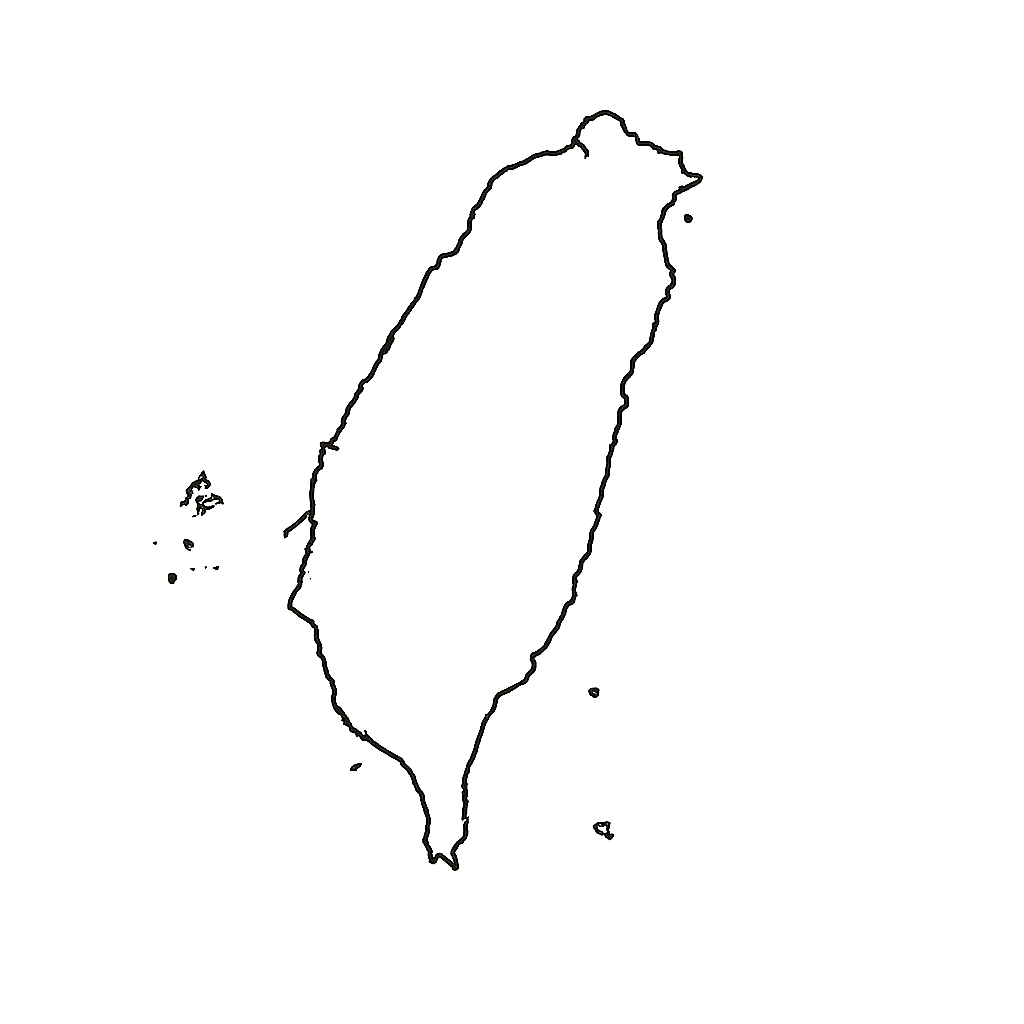
 Missionaries of Zutendaalse side by side...
 On the world map...